
Productivity advice is everywhere. Wake up at 5 AM! Meditate for 30 minutes! Drink lemon water! But what if you're a freelancer who just wants to get more done without turning into a wellness influencer?
Ben's Productivity Disaster Era
Ben tried everything. He bought the fancy planner, downloaded the productivity apps, and even attempted the "miracle morning" routine (it lasted exactly three days). His problem wasn't lack of motivation – it was chaos.
His typical day looked like this: Wake up, check email, panic about urgent client request, spend two hours putting out fires, grab coffee, check email again, realize it's already 2 PM, finally start actual work, get interrupted by Slack notifications, work until 10 PM, collapse into bed.
"I'm working 12-hour days but only getting 4 hours of real work done," Ben complained to his mentor, Maria. "I'm exhausted and my clients think I'm slow."
Maria laughed. "You don't need more productivity hacks. You need fewer interruptions and better boundaries."
The Myth of Multitasking (And Other Freelance Lies)
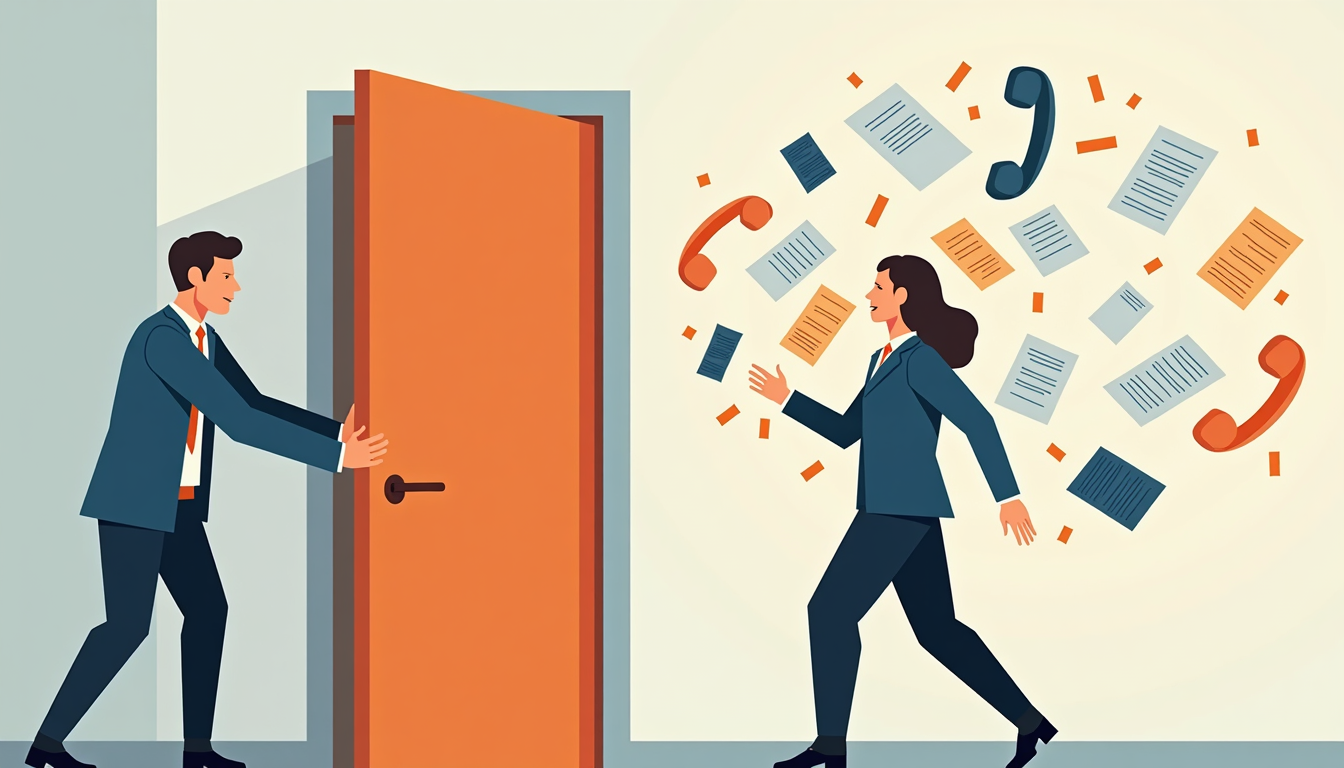
Ben thought he was great at multitasking. He could answer client emails while coding, take phone calls during design work, and switch between projects seamlessly. The reality? He was doing everything poorly and taking twice as long.
Research shows that multitasking actually reduces productivity by up to 40%. For freelancers, this is especially dangerous because context switching between different client projects can cost you hours per day.
Ben's breakthrough came when he started tracking his time honestly. He discovered he was spending:
- 2 hours per day on email and Slack
- 1 hour per day on administrative tasks
- 30 minutes per day finding files and information
- Only 4.5 hours per day on actual billable work
No wonder he was working 12-hour days and still behind.
The Anti-Productivity System That Actually Works
1. The "No Email Before Noon" Rule
Ben's first change was simple but revolutionary: no email before noon. None. Not even a peek.
The first week was torture. Ben felt like he was missing emergencies. But nothing burned down. Clients learned to wait. Most "urgent" emails resolved themselves or weren't actually urgent.
Instead, Ben used his morning hours for his most important work – the deep, focused stuff that required his full attention. By 1 PM, he had accomplished more than he used to in an entire day.
2. Theme Days Instead of Time Blocking
Time blocking never worked for Ben. Life always interfered. A client emergency would derail his schedule, and he'd spend the rest of the day trying to catch up.
Instead, he implemented theme days:
Monday: Client meetings and planning
Tuesday: Deep work on Project A
Wednesday: Deep work on Project B
Thursday: Admin, marketing, and business development
Friday: Catch-up and loose ends
This gave him flexibility while ensuring nothing fell through the cracks. If a client emergency happened on Tuesday, he could shift Project A to Friday without disrupting his entire week.
3. The "Two-Minute Rule" Actually Works
Ben was terrible at small tasks. "I'll handle that later" was his motto, which meant his to-do list was a graveyard of 5-minute tasks that never got done.
He implemented the two-minute rule: if something takes less than two minutes, do it immediately. Send that quick email. Upload that file. Respond to that Slack message.
Result: His to-do list shrank by 60% and his mental clarity improved dramatically.
Taming the Technology Beast
Ben's biggest productivity killer was technology. Notifications, apps, and "helpful" tools were constantly interrupting his flow.
The Notification Purge
Ben went nuclear on notifications. He turned off:
- All email notifications (he checks at 1 PM and 4 PM)
- Slack notifications (he checks when he switches tasks)
- Phone notifications (except calls from his girlfriend)
- Social media notifications (deleted the apps from his phone)
The result? His focus time increased from 20-minute chunks to 2-hour deep work sessions.
The "One Browser Tab" Rule
Ben discovered he had 27 browser tabs open at any given time. Each one represented a different task, idea, or distraction.
His new rule: maximum 3 tabs per project. One for the work, one for reference, one for testing. When he switches projects, he close all tabs and start fresh.
Tool Consolidation
Ben was using 12 different productivity tools. He consolidated to three:
- Notion: Project management and client notes
- Google Calendar: Appointments and deadlines
- Toggl: Time tracking (the honest kind)
Everything else got deleted. Less tools meant less time managing tools.
The Energy Management Revolution
Maria's best advice was about energy, not time. "You can't create more hours, but you can create more energy."
Work With Your Natural Rhythms
Ben discovered he was a morning person for creative work and an afternoon person for administrative tasks. Instead of fighting this, he embraced it:
9 AM - 1 PM: Creative deep work (coding, design, writing)
1 PM - 2 PM: Lunch and walk (no screens)
2 PM - 4 PM: Client communication and meetings
4 PM - 5 PM: Admin tasks and planning
After 5 PM: Done (unless there's a true emergency)
The "Shutdown Ritual"
Ben used to work until he collapsed. Now he has a 15-minute shutdown ritual:
- Review tomorrow's priorities
- Clear email inbox to zero
- Update project status for clients
- Close all work tabs and applications
- Say "work is done for today" out loud
This ritual signals to his brain that work is over, allowing him to actually relax and recharge.
Handling Client Interruptions Without Losing Your Mind
Ben's biggest challenge was clients who treated him like an on-call employee. The "quick question" that turned into a 30-minute call. The urgent email that needed immediate response.
The Communication Boundaries That Saved Ben's Sanity
Ben updated his client onboarding process to include clear communication expectations:
Response Times:
- Email: Within 24 hours (usually much faster)
- Slack: During business hours (9 AM - 5 PM)
- Phone: By appointment only
- Emergencies: Text for true emergencies only
Meeting Policies:
- All meetings require agenda and objectives
- Maximum 30 minutes unless specified
- Meeting notes and action items sent within 24 hours
Most clients respected these boundaries. The ones who didn't? Those were exactly the clients he didn't want to work with anyway.
Ben's Current Productivity System (The Simple Version)
Two years later, Ben's productivity system is almost boringly simple:
Daily Routine:
- 9 AM: Review priorities, no email
- 9:30 AM - 12 PM: Deep work session 1
- 12 PM - 1 PM: Lunch and walk
- 1 PM - 2 PM: Email and communication
- 2 PM - 4:30 PM: Deep work session 2
- 4:30 PM - 5 PM: Shutdown ritual
Weekly Structure:
- Monday: Planning and client meetings
- Tuesday-Thursday: Deep work days
- Friday: Admin and loose ends
Monthly Review:
- What worked? What didn't?
- Are my systems still serving me?
- What needs to change for next month?
The Productivity Myths That Wasted Ben's Time
Ben wants to save you from the mistakes he made:
Myth 1: You Need to Wake Up at 5 AM
Ben tried this. He was miserable and less productive. He now wakes up at 7 AM and works better than ever.
Myth 2: More Hours = More Output
Ben now works 35 hours per week and makes more money than when he worked 60 hours. Quality beats quantity every time.
Myth 3: You Need Expensive Productivity Tools
Ben's best tools are free: calendar, notes app, and the discipline to close browser tabs.
Myth 4: You Should Always Be "On"
Ben's best ideas come when he's not working. Real rest isn't lazy – it's strategic.
Your Simple Action Plan
Don't overhaul everything at once. Start with one change:
- Pick One Boundary: No email before noon, or set specific office hours
- Track Your Time Honestly: Where are you actually spending your hours?
- Kill One Distraction: Turn off notifications or delete time-wasting apps
- Create a Shutdown Ritual: Signal to your brain when work is done
- Review Weekly: What worked? What needs adjustment?
Remember: Productivity isn't about doing more. It's about doing what matters consistently. Ben went from working 60-hour weeks to 35-hour weeks while doubling his income. The secret wasn't hacks – it was focus, boundaries, and the courage to say "no" to things that didn't matter.
Your best work happens when you're not exhausted, distracted, or overwhelmed. Sometimes the most productive thing you can do is take a nap.
Related Articles